Posts

Turning the CorNer

Image
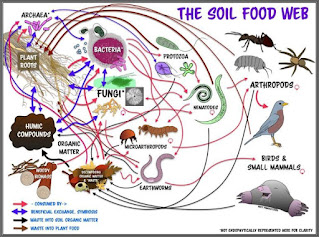
Almost following on from my last blog post with this one so please switch off if your tired already, I won’t be offended!.  The C:N is the amount of soil organic carbon (SOC) to nitrogen ratio in the soil. SOC is not to be confused purely with thatch levels, there is good organic matter (OM) and bad OM. The C:N ratio is all about carbon and nitrogen cycling through the natural means of the soil microbial. Getting the C:N balance to a higher ratio and stabilising the relationship between the SOC and the soil biology is paramount and will reap rewards in the soil by giving the soil microbial the food and environment it likes to thrive. The little greenkeepers will do a lot of the work keeping the thatch levels to a sensible level without the need to pull cores, thus not disturbing the biology more and keeping the symbiosis between plant and soil saving a few quid on the feeding programme which is essential with rising costs. From an environmental perspective pulling cores is releasin...
No core aeration and why!

Image
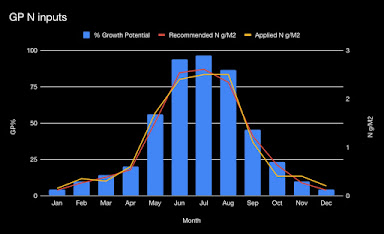
It’s been a while since I posted a blog and that’s partly because of a busy schedule both at home and at work these days. So you may be wondering why I’ve aerated our greens and no longer pull out messy cores. The answer is a relatively simple one and it all revolves around management techniques. There’s more than one way to skin a cat and some manage their surfaces with high nitrogen feed and higher irrigation volumes to produce greens that recover well from damage and look nice and green throughout the season, others manage their surfaces with less nitrogen feed and less water that requires less of some other inputs to produce firm greens that putt well. The science behind those techniques is a simple one too. When turf grasses grow they produce thatch or Organic matter (OM), the faster they grow the faster the OM produces. We greenkeepers and groundsman force grass to grow sometimes by adding nitrogen feeds and we can also control growth by water inputs and plant growth regulators (...

Winter like start to spring

Image
 As you are probably aware the golf course is slow to recover from winter. We have a few winter bare areas from traffic in wet conditions, the tees are still showing wear from play back of last year and most importantly the greens still showing the winter colour and are not growing much to aid any recovery. This year since the wet weather retreated in January we was hit with a barrage of snow and ice for a month in February/March and now April is the driest coldest month on record. We have currently recorded 21 frosts in April alone. The  cold night temperatures are fooling the grass into thinking we are still in winter. Plants need to take the suns energy and convert C02 and water into sugars and oxygen essentially and a lot of this process happens at night when the plant has collected maximum energy from the sun. When you have half decent day temperatures but freezing by night this process stops or slows down. We plant growers use something called growing degree days (GDD) t...

Winter/course improvement program

Image
Since the country locked down and all golf courses in England was ordered to close again!, the interim golf council along with myself, the business manager and the professional staff wanted to make the most of the time to undertake a few course improvements. These are a few projects undertaken this side of Christmas with more projects to come in the new year (weather permitting) A very difficult time for the ground staff to start with due to leaves still needing clearing on a near daily basis, grass still growing due to temperatures reaching highs of 18 degrees in November and rain events making all of those tasks almost impossible without making tyre marks and spreading mud from worm casts!. The course being closed to all apart from walkers getting their daily exercise (I know silly!) has enabled us to get a couple of jobs done and a major one started, this wouldn’t have been able to in the same time frame. Firstly we had the artisan scheme extended to make use of some extra hands to ...

Trial plots

Image
It’s been a while since my last post and that’s testament to the lack of spare time I get these days, but I am keen on keeping this line of communication between myself and the membership. Phoenix members will have noticed my trial plots at the rear of 16th, 17th and 18th. If your wondering why these weaker looking squares with disease patches and a lack of colour are on the greens, then I’m going to tell you, but first a background into the products we use to help with disease in autumn and winter. (Grab a coffee some caffeine may help with this one 🥱) We are sat on 90-95% Poa Annua grass and this is prone to diseases like anthracnose and fusarium patch. As we move into autumn and winter, fusarium is the biggest threat to our greens and most clubs, including Phoenix, spend a lot of money on keeping the greens as disease free as humanly possible. These products include a balanced nutritional feed for the turf, nutrients that make an environment unfavourable for fungal pathogen develop...

Aeration and infiltration

Image
Tomorrow, Monday the 22nd of June will be our summer aeration window on the putting greens at Phoenix golf club. We have done no major aeration since our hollow core just before lock-down and its well over due. We had certain restrictions placed on us from the R&A and England golf, some of which I didn't agree with but nether the less best not to upset anyone, especially as I'm avid twitter poster, too many eyes watching 👀.  Since reopening of the golf course the traffic has been immense, lots of play from members, visitors and squeezing extra large field competitions in has its detrimental effect on the compaction of the greens and ultimately infiltration of water. (below is the results of the last test, you can spot our suspect greens!!). Infiltration is measured in mm/hour and is the rate at which soil can allow water to move into and through the soil profile, this allows the soil to store the water for plants and soil biology but also release excess water. Sandy soils ...

Poa flower in putting surfaces

Image
Here at Phoenix we have been managing Poa annua on our golf greens ever since they changed to being a high percentage of Poa probably 50 or 60 years ago. The old management techniques have certainly given us some problems underneath in our soils and consequently on top on our surfaces. High kg of Nitrogen per annum, too much water, height of cut too low and lots of disturbance to keep on top of organic matter has started the circle of decline and has given Poa annua the advantage it seeks over other more preferred perennial species like Bents. There are several sub species of Poa annua, old established push-up greens like here at Phoenix are 95% Poa, but I would have a guess that 90% of that is Poa annua var reptans which is the preferred species. This so called annual actually grows as an annual, a biennial and a short lived perennial. The pure annual species is more prone to death from disease and drought so is definitely not what we want in the green. All grasses flower and ...